A pre-alpha experiment in hydrofoil wing design.
Albatross turns a planform sketch, airfoil sections and a dihedral curve into an analyzed, CAD-ready wing surface. The software is young: its aerodynamic analysis has not been independently verified yet, and I am looking for experienced people to help change that.
No key yet? Write to jurij@albatrossfoil.com and tell me about your background and what you would test with.
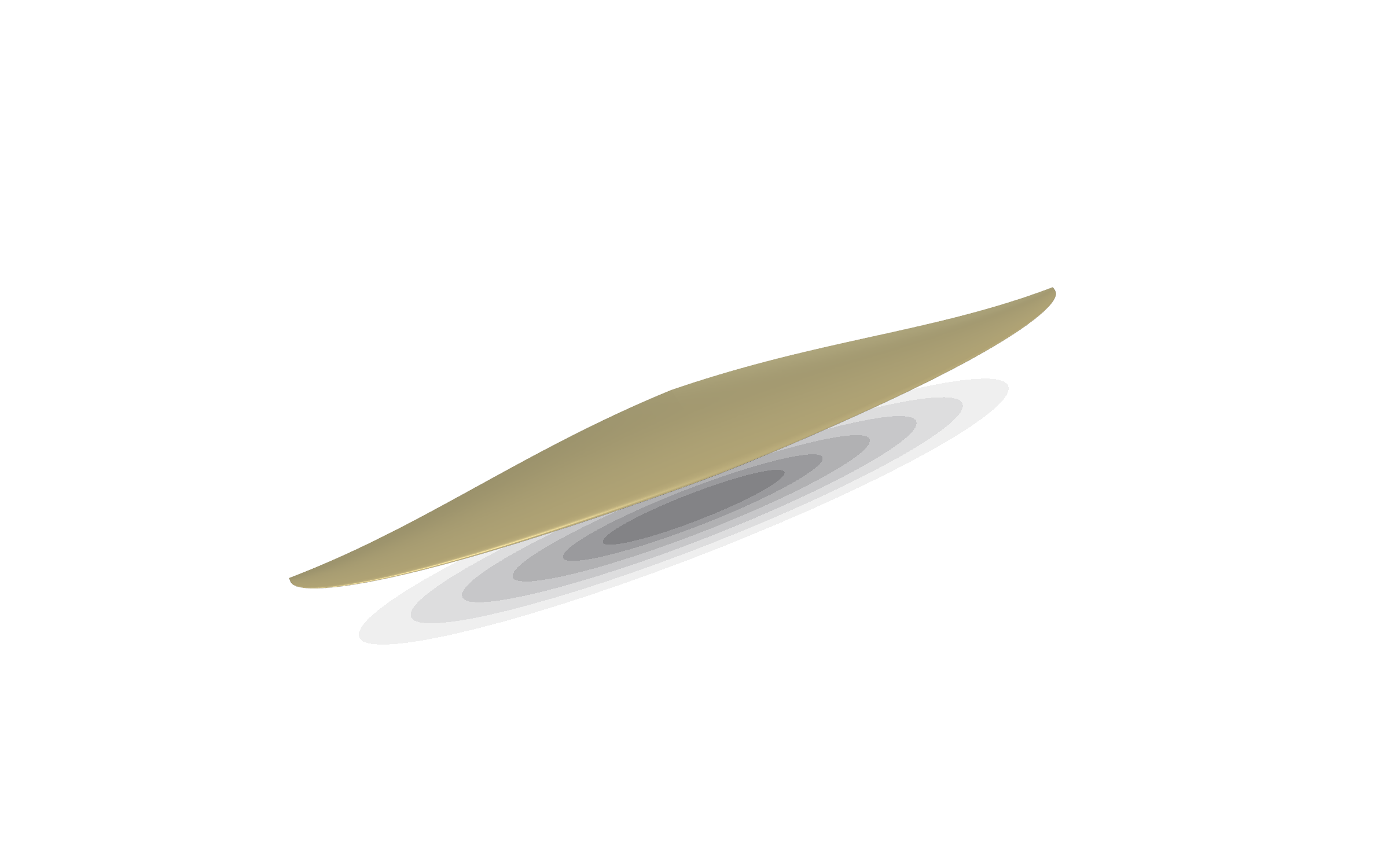
From sketch to CAD-ready wing surface.
Albatross generates CAD-ready surfaces for hydrofoil half-wings from a planform sketch, a dihedral curve, and airfoil sections placed along the span. The exporter writes a single wing skin that imports directly into CAD. Both ends stay open by design, so you can join it to a fuselage, add a tip cap, or mirror it downstream.
Integrated aerodynamic analysis provides 2D polars for every station along the span, plus a 3D vortex-lattice analysis of the full wing that accounts for sweep, dihedral and winglets.
Around that core: a multi-wing workspace with autosave, a section library with multi-criteria ranking, a section optimizer, and per-station polar inspection.
What it looks like today.
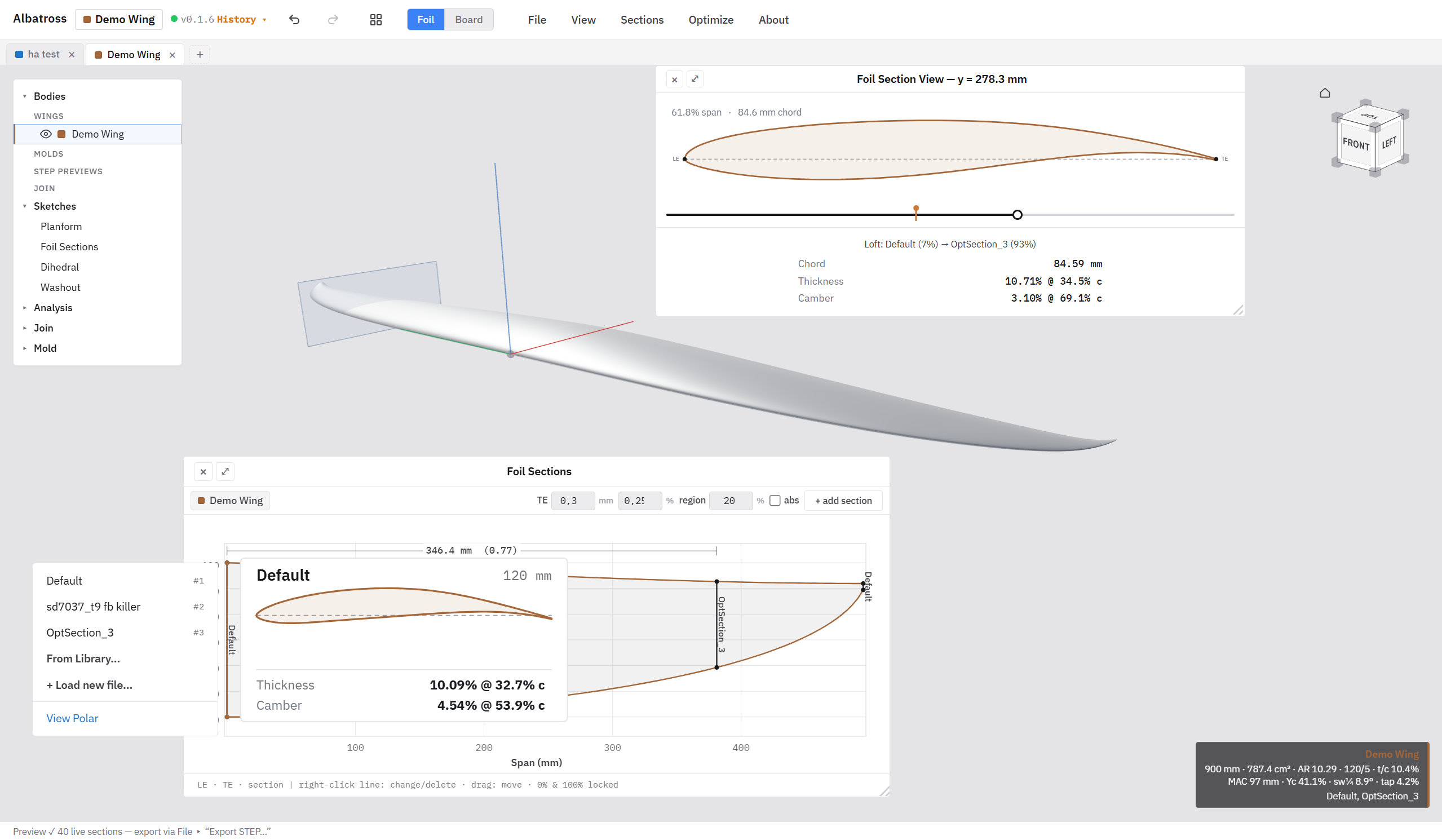
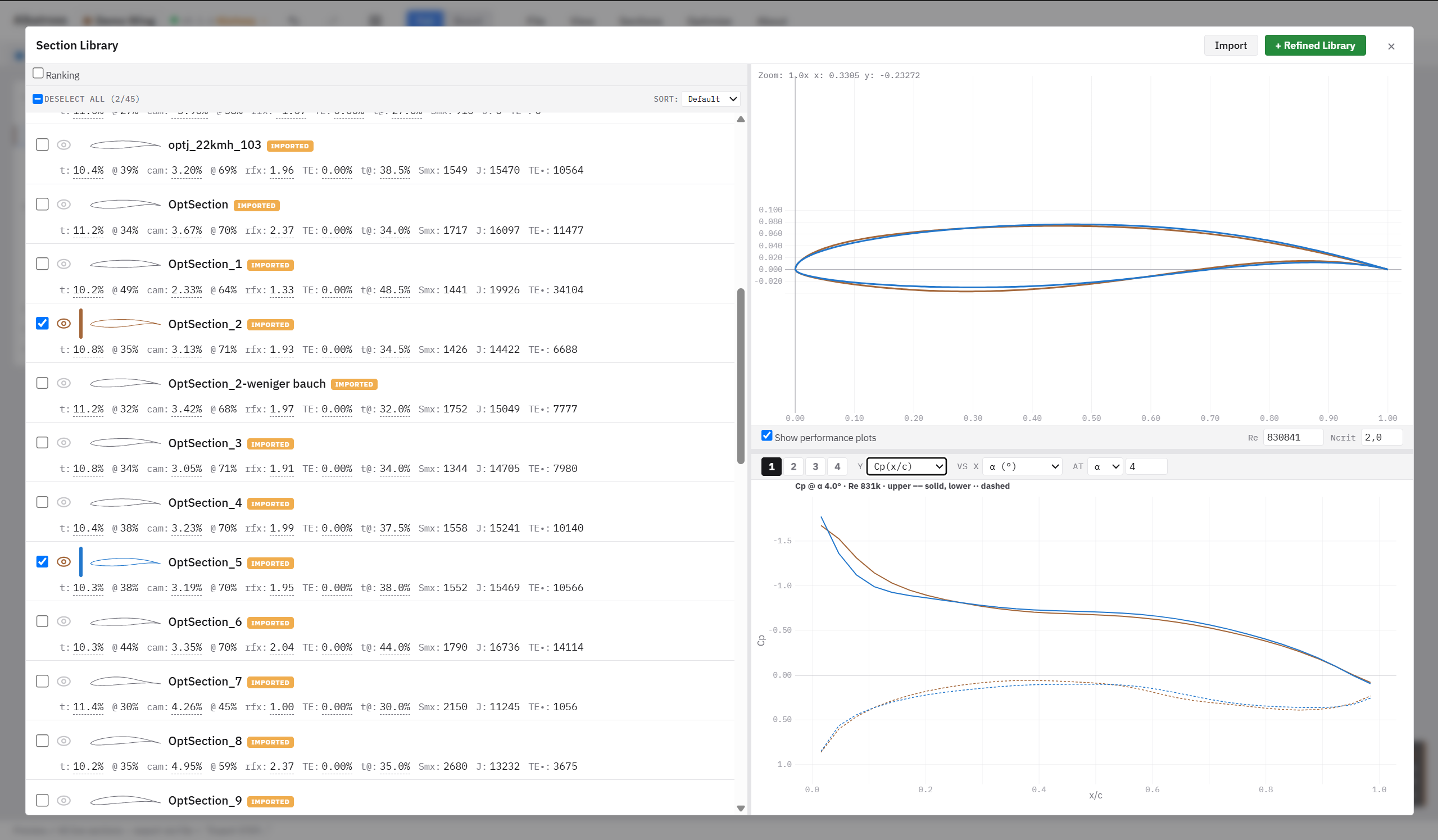
Features
Planform sketching
Draw the wing outline with leading and trailing edge curves, in real millimetres.
Foil sections
Place airfoil sections along the span, exactly where you want them.
Dihedral & washout
Shape the spanwise curve and twist with direct curve editors.
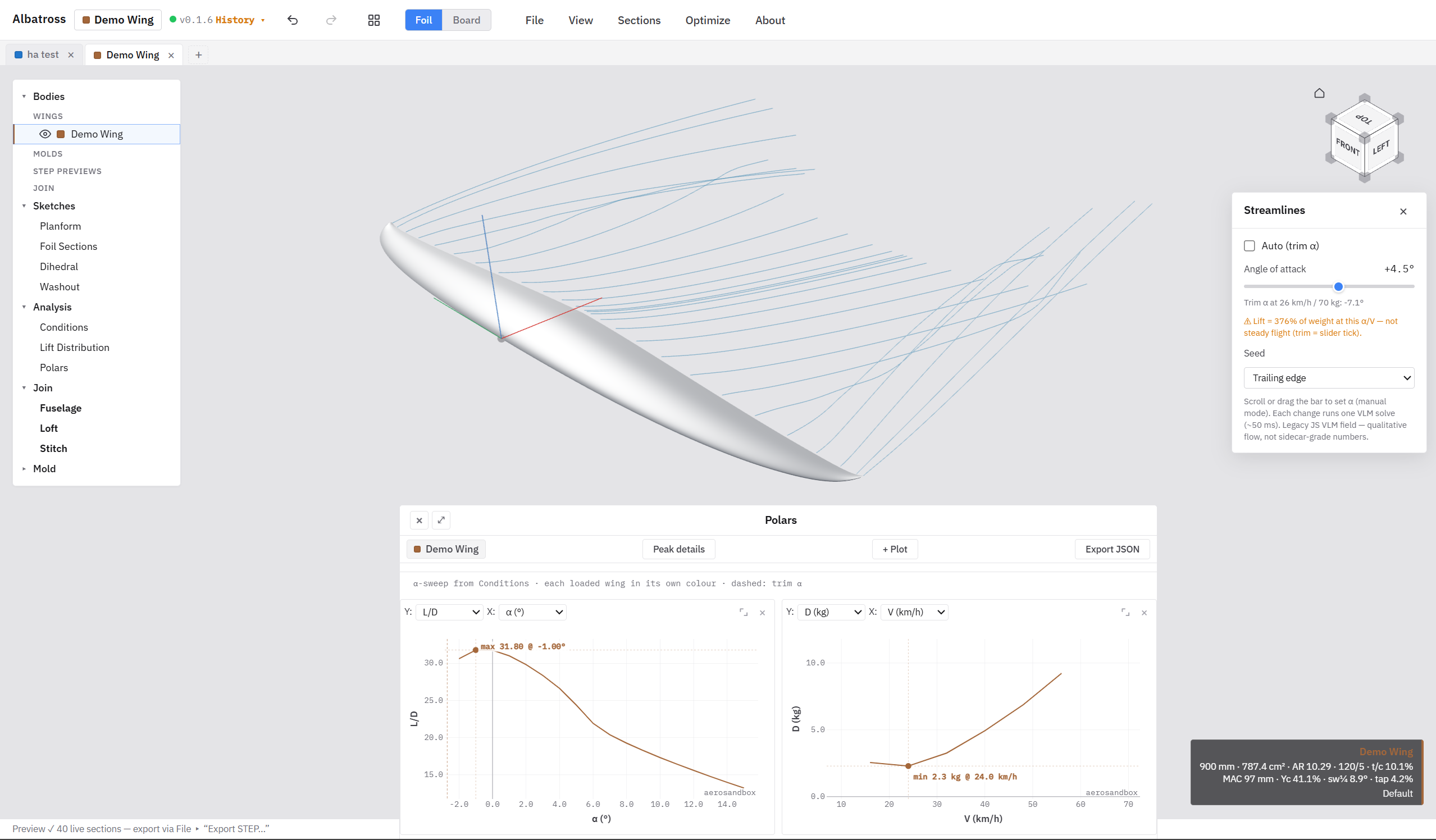
Aerodynamic analysis
2D polars per station plus a full 3D analysis with lift distribution and drag breakdown.
Section library
Ranked airfoil library with multi-criteria scoring (efficiency, low-speed, stall safety) and a built-in section optimizer.
Polars & comparison
Plot any metric for every open design side by side.
CAD export
A single surface that imports cleanly into Fusion 360. Every other CAD package is exactly what I need testers for.
Multi-design workspace
Several designs open at once, all autosaved.
Board mode
Design the matching foil board too: outline, rocker, deck, and rails.
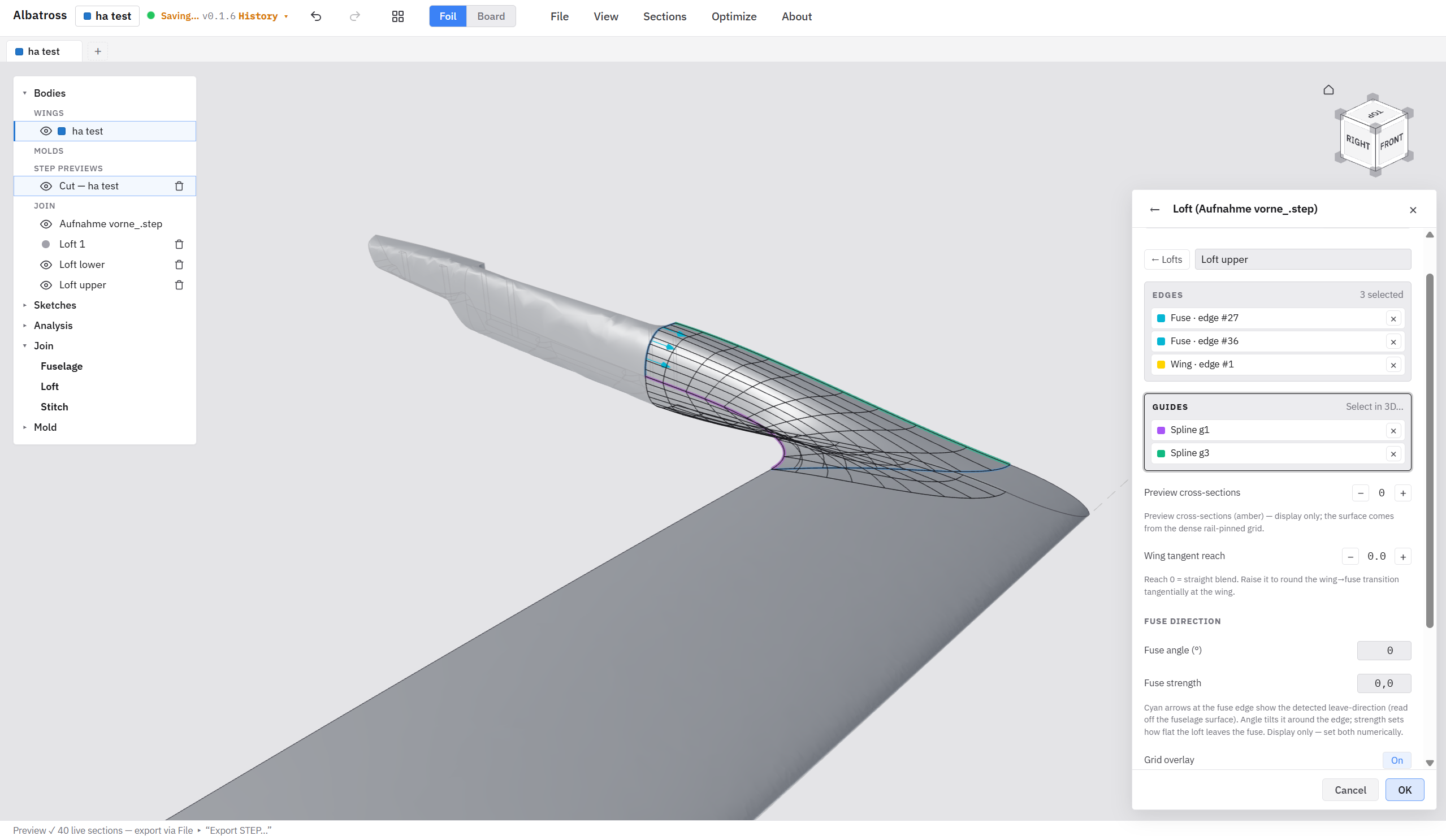
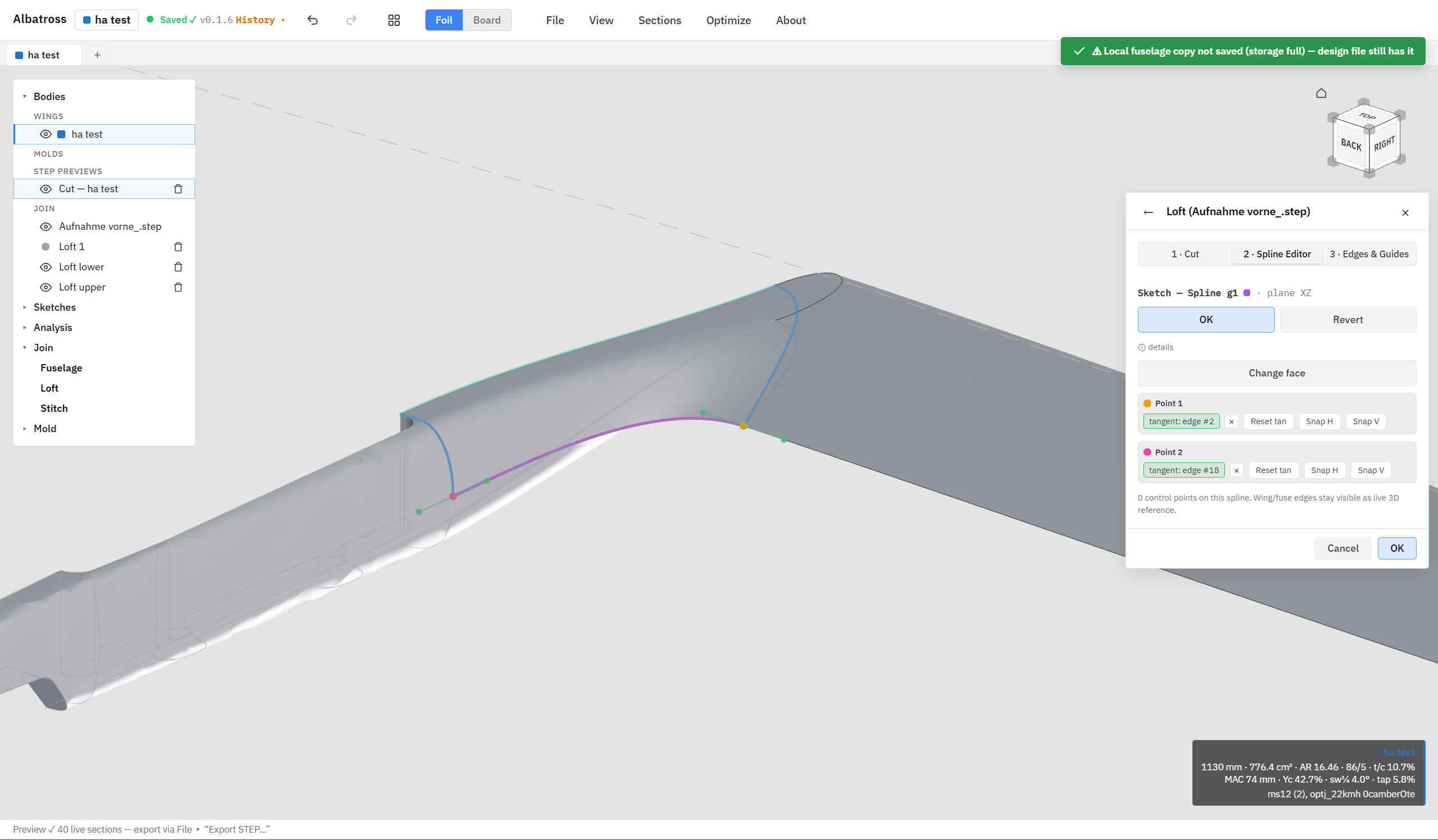
Fuselage loft
Loft the wing into a fuselage junction with tangency control, directly in Albatross.
Lift distribution trim
Experimental: a solver that adjusts twist and camber across the span to match a target lift distribution for a given planform.
Trailing edge control
Explicit control over trailing edge thickness, including an absolute mode for manufacturing.
Why this exists.
Albatross exists because wings are hard work in general-purpose CAD. Getting a precise, smooth wing surface usually means wrestling with loft tools or writing scripts, and every design change costs time. In Albatross the wing itself is the interface: sketch the planform, place the sections, and the geometry follows. Even the fuselage junction, which used to be the last step left to external CAD, is now handled by the built-in loft engine.
My goal is to make hydrofoil prototyping simpler, faster and cheaper, so that developing and testing new foil designs stays affordable, even in a high-cost region like central Europe. One path is licensing Albatross to foil companies for rapid prototyping. Another is expanding the mold generation until Albatross exports print-ready molds sized for common 3D printers, so anyone with a printer can build a wing from their own design.
Where the project stands.
The geometry side works. Sketching, lofting and export are tested, and the exported surfaces import cleanly into Fusion 360. Other CAD packages have not been tested seriously yet.
The aero side is unverified. The integrated analysis produces plausible numbers and reacts correctly to the changes I test on the water, but no aerodynamicist has reviewed it. Until that happens, treat every number as orientation, not as truth.
About me: my name is Jurij Scheibler, I am 22, and I design, build and race hydrofoils. I machine my own molds, laminate my own wings, and test everything on the water. My aerodynamic knowledge is self-taught, built from XFLR5, literature and many built and tested prototypes; no one with a formal aerodynamics education has reviewed this tool yet. My goal is to work in hydrofoil development professionally, and Albatross is part of how I am working toward that. You can also find me on Instagram at @jurij.scheibler.
Help me verify it.
Two parts of Albatross need independent checking by people with deeper expertise than mine:
- 1 The 3D analysis. Compare Albatross against tools you trust (XFLR5, AVL, CFD), against tank data, or against wings whose real-world behaviour you know. If the numbers are off, I want to know where and by how much.
- 2 The CAD export. The STEP surface opens cleanly in Fusion 360. I want to know how it behaves in SolidWorks, Rhino, Onshape, FreeCAD, CATIA and whatever else you design in.
If you are an aerodynamicist, a CFD engineer, a student with access to a wind or tow tank, or a foil designer with data from real builds: you are exactly who I am looking for.
Beta testers get free access, a direct line to me, and a tool that changes based on what they find.
Write to jurij@albatrossfoil.com with your background and what you would test with.
Open Albatross
Albatross runs in the browser. Access is by key, so I know who is testing what. Your key opens the build it belongs to.
- 1 Enter your access key below.
- 2 Albatross opens in your browser.
- 3 Design foils. Your work autosaves in your browser.
No key yet? Write to jurij@albatrossfoil.com and tell me about your background and what you would test with.